

Every rabi season the same question comes up in wheat-growing villages: is it worth buying a machine, or should you keep calling the combine and the labour gang? The answer genuinely depends on your acreage — and on one factor most people leave out of the sum entirely.
Start with the three real options
For a wheat farm in India there are practically three ways to get the crop off the field. Hire a combine harvester. Buy or hire a power reaper (see our wheat reaper machine guide for harvest timing and model choice). Or hire a labour gang to cut by hand. Each has a break-even point, and they are further apart than most brochures suggest.
Labour gangs: flexible, until they aren't
Hand cutting still makes sense on very small plots, and it gives you the cleanest straw. The problem is not the rate per acre — it is availability. Everybody in your village needs labour in the same ten-day window, because wheat does not wait. When a gang does not turn up, the cost is not the wage you saved; it is grain shattering in the field while you wait for the next crew.
Farmers who have moved to a machine almost never cite cost as the main reason. They cite control over timing.
Combine harvesters: fast, but they eat your straw
A combine is unbeatable on speed for large, regular blocks. On 40 acres of even wheat, nothing else comes close. Two things work against it on a smaller farm.
First, you are in a queue. Combine operators work the largest farms first because that is where their day-rate economics sit, so a 5-acre farmer often gets the machine late — sometimes after the ideal window has closed.
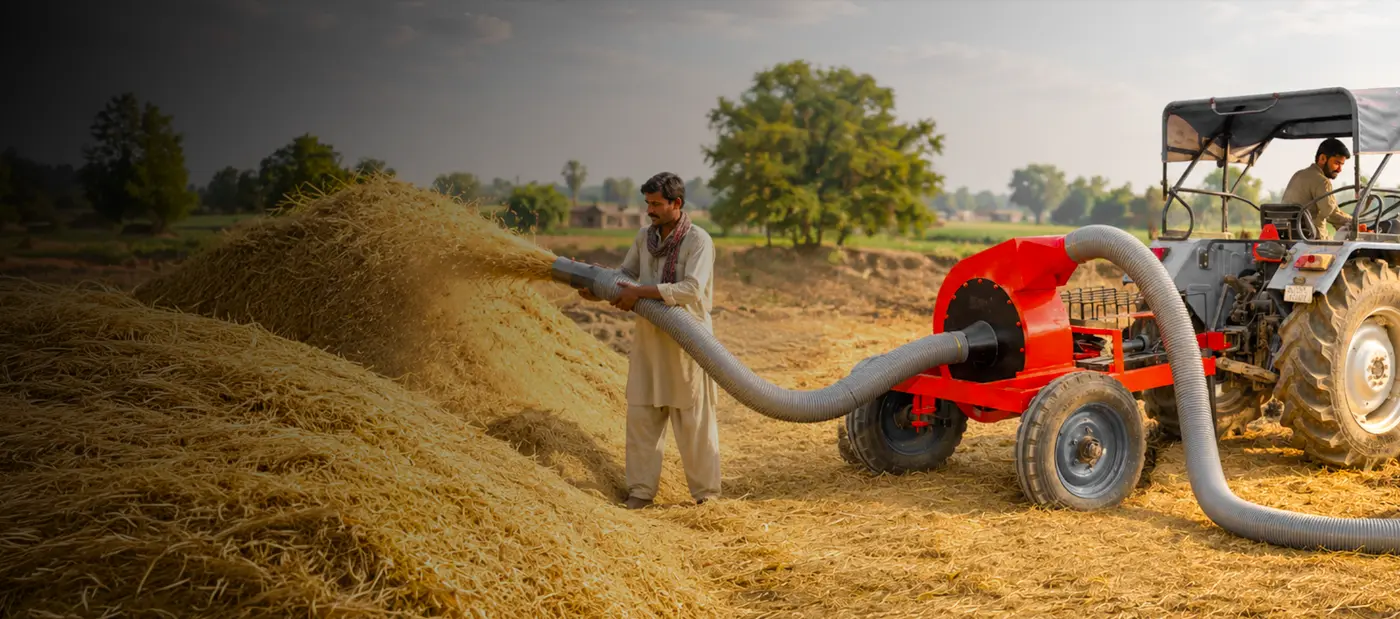
Second, and more importantly for anyone keeping livestock: a combine threshes in the field and leaves the straw scattered and broken. If you feed cattle or sell bhusa, that straw is an asset you have just given up. A reaper lays the crop down in a neat swath, and the straw stays yours — collect it with a straw loader and you have fodder stock or a saleable trolley of bhusa.
The factor most people leave out: straw. On a mixed farm with cattle, recovered bhusa can be worth as much as the difference between the three harvesting methods put together. Count it before you compare rates per acre.
Power reapers: where the middle ground actually is
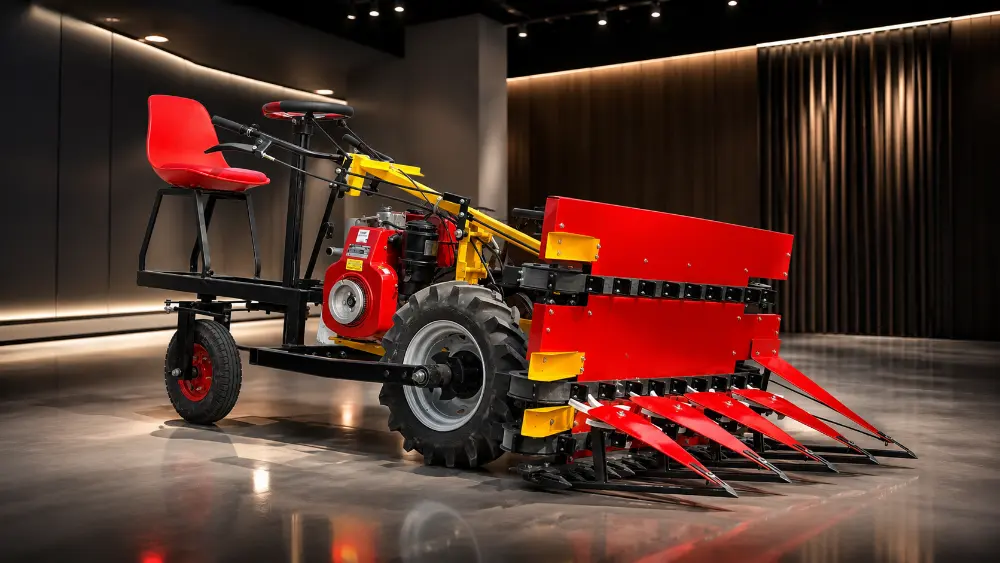
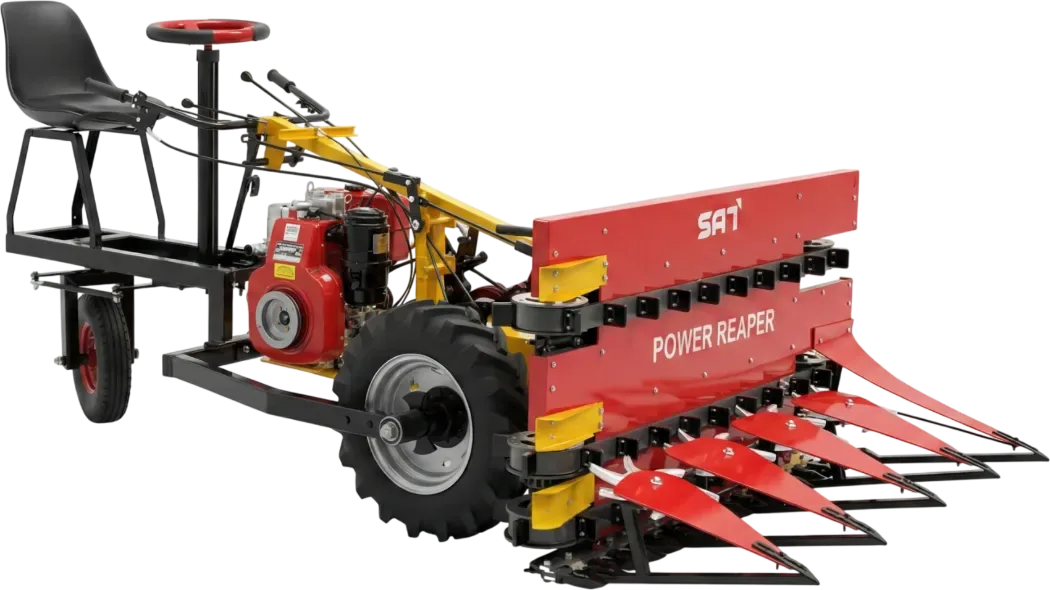
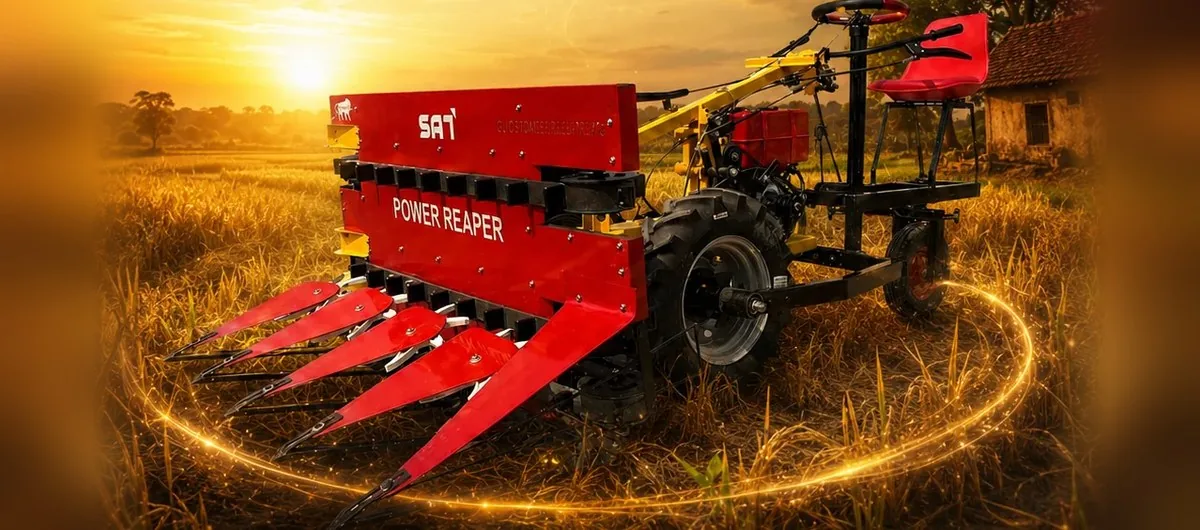
A self-propelled reaper is a walk-behind machine with a cutter bar, powered by a small 5 HP engine. Our SAT-R101 and SAT-R102 cut roughly 0.6–0.9 acre an hour with one operator, down to about 4 cm from the ground.
That last number matters more than it looks. Cutting low means more straw recovered per acre — the difference between a 4 cm and a 15 cm stubble, across ten acres, is a meaningful quantity of fodder.
The reaper's real advantage is that you own the timing. The machine is in your shed. When the crop is ready on Tuesday morning, you cut on Tuesday morning.
| Method | Speed | What happens to the straw | Control over timing | Best suited to |
|---|---|---|---|---|
| Labour gang | Slowest | Cleanest straw of the three | Poor — every farm needs labour in the same ten-day window | Very small plots |
| Combine harvester | Fastest on large, regular blocks | Threshes in the field; straw left scattered and broken | Poor for smaller farms — operators work the largest farms first | Around 40 acres of even wheat |
| Power reaper (SAT-R101 / R102) | About 0.6–0.9 acre per hour with one operator | Lays the crop in a neat swath; straw stays yours | Full — the machine is in your shed | 2–20 acres, especially with livestock |
The arithmetic by acreage
- Under 2 acres: Hiring generally still wins. A machine sitting idle 355 days a year is hard to justify on this area alone — unless you plan to hire it out.
- 2–5 acres: The crossover zone. A reaper starts making sense here, particularly if you keep cattle, grow a second crop that also needs cutting, or have been let down by labour availability before.
- 5–20 acres: A reaper is usually the strongest option. You are big enough to use it properly, small enough that combine operators deprioritise you, and you almost certainly want the straw.
- Above 20 acres: Combine hire for the grain often wins on speed — though many farms at this size still keep a reaper for fodder crops, field edges and awkward corners a combine cannot reach.
| Your acreage | Recommendation | Why |
|---|---|---|
| Under 2 acres | Hiring generally still wins | A machine sitting idle 355 days a year is hard to justify on this area alone — unless you plan to hire it out |
| 2–5 acres | The crossover zone — a reaper starts to make sense | Particularly if you keep cattle, grow a second crop that also needs cutting, or have been let down by labour availability before |
| 5–20 acres | A reaper is usually the strongest option | Big enough to use it properly, small enough that combine operators deprioritise you — and you almost certainly want the straw |
| Above 20 acres | Combine hire for the grain often wins on speed | Many farms this size still keep a reaper for fodder crops, field edges and corners a combine cannot reach |
Three questions that decide it faster than any calculator
Do you keep livestock? If yes, the straw recovery argument alone moves the answer toward a reaper.
Have you ever lost crop waiting for labour or a combine? If yes, you already know what timing control is worth, and it is more than the rate difference.
Are your fields small or irregular? If yes, look specifically at a differential power reaper — the differential lock lets it turn tightly instead of fighting you at every headland. Our comparison guide covers the difference in detail.
If you buy, buy for the whole season
A reaper bought only for wheat is a machine that works two weeks a year. The farms that get the most from one use it across the calendar — wheat and barley in rabi, fodder maize and jowar through the year, paddy where it grows. Add the seating attachment and a 10-hour cutting day stops being punishing, which in practice means you actually finish the field in a day.
Machinery subsidy is worth checking before you commit — reapers fall inside several state schemes, and our Gujarat subsidy roadmap walks through the paperwork. For what actually drives the number on a quotation, read our power reaper price guide.
Power reaper vs combine harvester: quick answers
Power reaper vs combine harvester: which is better? It depends on acreage and on whether you want the straw. Under about 2 acres, hiring still wins. From 2 to 20 acres a power reaper is usually the better buy: one operator cuts about 0.6–0.9 acre an hour, you harvest on your own day, and the straw stays whole. Above about 20 acres, hiring a combine for the grain is often faster.
Does a combine harvester save the straw? No. A combine threshes in the field and leaves the straw scattered and broken, so it is lost as bhusa. A power reaper lays the crop in a neat windrow and the grain is threshed later, so the full straw is kept for fodder or sale.
Is a power reaper cheaper than a combine? A combine is usually hired per acre at local rates, and at peak season operators serve the largest farms first. A power reaper is bought once, from ₹1,30,000 factory-direct for the SAT-R101 or SAT-R102, and also cuts paddy, soybean, mustard and fodder through the year.
Still unsure which way your farm falls? Tell us your acreage and crops and we will give you a straight answer — including when the answer is that you do not need a machine yet.