

After every harvest, most fields carry a crop nobody counts. Straw gets burned, ploughed in or left because collecting it by hand costs more than it appears to be worth. Meanwhile, on the same road, dairy farmers are buying bhusa all year at prices that rise steadily as the season goes on.
The gap between those two facts is a business.
Why straw normally gets wasted
Not because farmers do not value fodder — every livestock keeper knows exactly what bhusa is worth. The problem is the collection.
Gathering straw by hand is slow, needs labour precisely when labour is scarce, and delivers long straw that then needs chopping before cattle will eat it properly. Two jobs, two labour bills, in the narrow window before the next sowing.
Faced with that, burning looks rational. It is fast, it is free, and the field is clear tomorrow. It is also illegal in many places, damaging to soil life, and it destroys an asset.
What changes with a straw loader
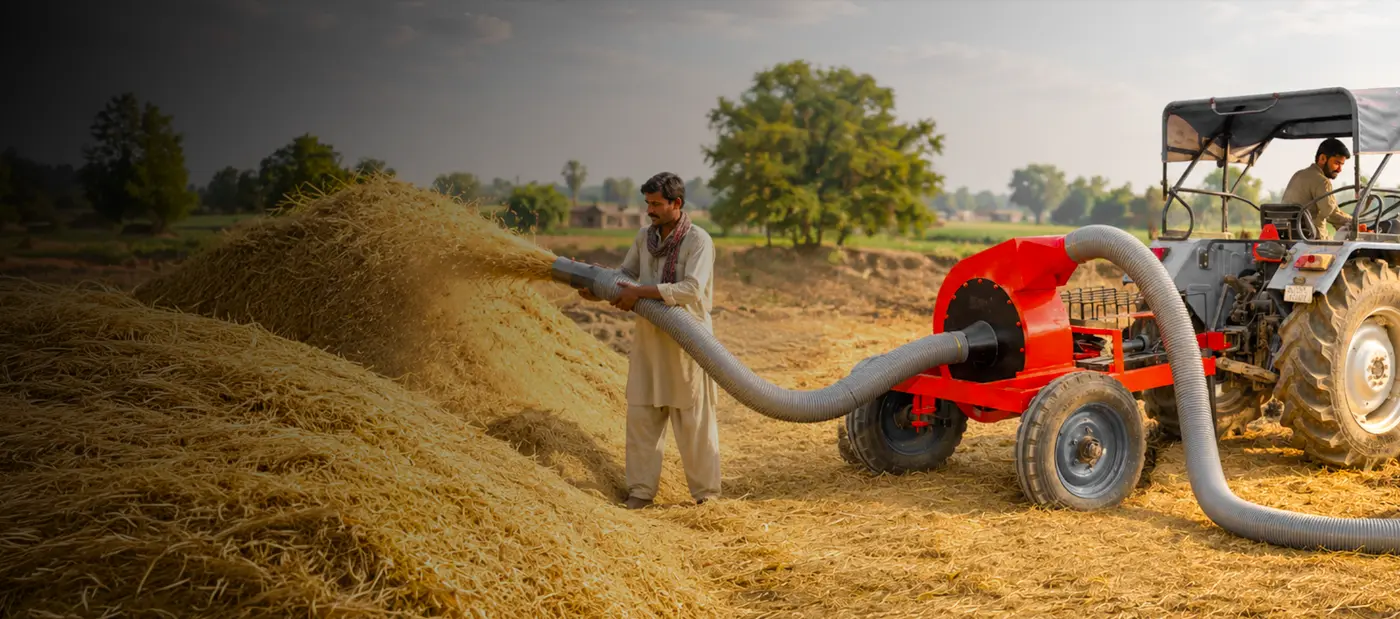
The SAT-L401 collapses both jobs into one pass. Hitched to any 15 HP+ tractor's PTO, a 1500 mm pickup sweeps the swath, an integrated cutter chops the straw as it is drawn in, and a centrifugal blower delivers it into the trolley behind.
The important part is the chopping. What lands in the trolley is finished bhusa — ready to feed or sell. No second machine, no second handling, no second labour bill.
A full trolley takes 20–25 minutes.
The unit that matters is the trolley. Not acres, not hours. Both fodder trading and custom-hire work are priced per trolley — so once you know your trolley turnaround, you can plan the whole economics of the machine.
Three ways the machine pays
1. Replacing bhusa you currently buy. If you keep cattle and purchase fodder, every trolley you collect is fodder you no longer buy. This is the most reliable of the three, because it does not depend on finding a buyer — and because bhusa prices climb as the season progresses, straw stored in April is worth more in October.
2. Selling bhusa. Dairy farms, gaushalas and fodder traders buy year-round. Fine, well-chopped bhusa from a clean field commands a better rate than coarse hand-collected straw. What was residue becomes a saleable output of the same harvest.
3. Custom-hire work. This is where the machine often earns fastest. Your neighbours have the same residue problem and no machine. Charging per trolley for loading their fields turns idle days between your own operations into income — and because the job takes 20–25 minutes a trolley, an operator can serve several farms in a day.
Most owners do some combination of all three, which is exactly why the machine tends to be busy: your own fodder first, hire work while the tractor is otherwise idle, sales when there is surplus.
Three ways a straw loader pays, side by side
| Route | How it works | What makes it work |
|---|---|---|
| Replacing bhusa you currently buy | Every trolley you collect is fodder you no longer purchase | The most reliable of the three — it does not depend on finding a buyer. Bhusa prices climb through the season, so straw stored in April is worth more in October |
| Selling bhusa | Dairy farms, gaushalas and fodder traders buy year-round | Fine, well-chopped bhusa from a clean field commands a better rate than coarse hand-collected straw. Residue becomes a saleable output of the same harvest |
| Custom-hire work | Charge per trolley for loading neighbouring fields | Often earns fastest. At 20–25 minutes a trolley, one operator can serve several farms in a day, turning idle days into income |
Most owners do some combination of all three — own fodder first, hire work while the tractor is otherwise idle, sales when there is surplus.
Doing the arithmetic on your own farm
Rather than quoting numbers that vary by district and season, here is the calculation to run with your own figures:
- How many trolleys of bhusa can your own land yield in a season?
- What are you currently paying per trolley for bought fodder?
- What is the going rate per trolley in your area — for the bhusa, and for hire work?
- How many neighbouring farms would use a hire service in the same window?
- What are your tractor running costs for a 20–25 minute trolley?
Farms that keep livestock and do some hire work generally find the machine pays for itself well inside two seasons. Farms with no livestock and no neighbours to serve should be more cautious — and we will say so if you ask us.
Field practice that protects your grade
Bhusa quality decides your rate, and it is mostly determined in the field.
Load while the straw is still slightly dry. This is the single most important habit. Slightly dry straw picks up cleanest, chops finest and stores best. Straw collected after a rain shower is harder to handle, produces a poorer grade, and risks mould in storage.
Do not wait. Every day between harvest and loading is a day the weather can turn and the residue can degrade. The farms that get the best from a straw loader treat collection as part of the harvest, not as a job for later.
Store dry and covered. Having gone to the trouble of collecting good bhusa, protect it. Storage losses undo field work quietly.
The benefits that do not show up as income
Clearing residue mechanically gets your field ready for the next sowing faster than burning-and-waiting or ploughing-in. On a double-cropped farm that turnaround has real value.
You also stop burning — which matters legally in a growing number of places, and matters agronomically everywhere. Burning destroys soil organic matter and the organisms that make soil work. Removing residue as fodder instead keeps the field productive without the fire.
Completing the fodder line
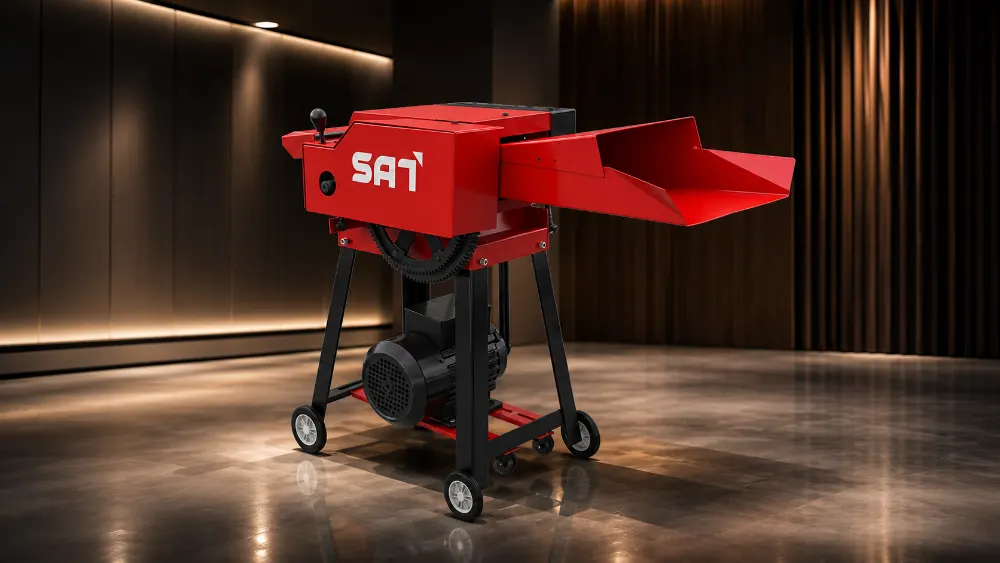
A straw loader handles the field end — dry residue, collected and chopped. The shed end is green fodder, and that is a chaff cutter's job: 600-800 kg an hour of green or dry kutti with adjustable cut length. Together they cover fodder from field to manger with no hand handling in between. Our chaff cutter buying guide covers choosing one.
Residue-management equipment attracts subsidy under several state schemes — see the Gujarat subsidy roadmap, and note that most schemes require approval before purchase.
Is it right for your farm?
Strongest case: you keep livestock, you harvest enough acreage to fill trolleys, you have a 15 HP+ tractor already, and there are neighbouring farms with the same residue and no machine.
Weaker case: no livestock, small acreage, no hire demand nearby. Then the machine is harder to justify on your own fields alone.
Tell us your acreage, crops, tractor and whether you keep cattle, and we will work through the numbers with you honestly — including when the answer is that the machine does not yet make sense.