

Farm machinery subsidy in Gujarat is not hard to get. It is hard to get on time, and almost every rejected or delayed file we see fails for the same handful of reasons — none of them about whether the farmer deserved the support.
This is the process as we see it from the manufacturer's side, having prepared quotations for a great many applications.
Before anything else: scheme names, category codes, assistance rates and deadlines change from year to year. Treat this as a map of the process, and confirm the current year's specifics on the official i-Khedut portal or with your Taluka Agriculture Office before you file.
Looking for the maximum amount? The national caps for reapers, chaff cutters and groundnut diggers, with a calculator, are on our farm machinery subsidy 2026 page.
1. Understand what i-Khedut actually is
i-Khedut is the Gujarat government's online portal for agricultural scheme applications. Rather than applying at an office, you apply online during a defined application window, and the department processes files against a district-wise allocation.
Two consequences follow from that, and they matter more than any eligibility rule. First, applications open and close on fixed dates — miss the window and you wait for the next cycle. Second, allocations are limited per district. A perfectly valid application filed late can fail simply because the district's quota is exhausted.
2. Find the right category for your machine
Farm machines are not one category. Harvesting equipment, plant-protection equipment and fodder machinery generally sit under different heads, with different assistance rates.
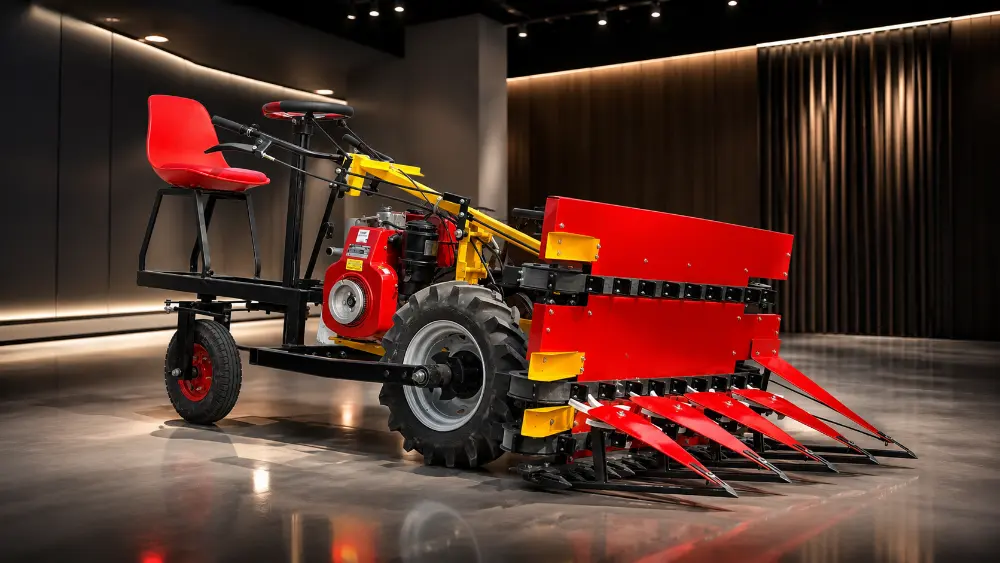
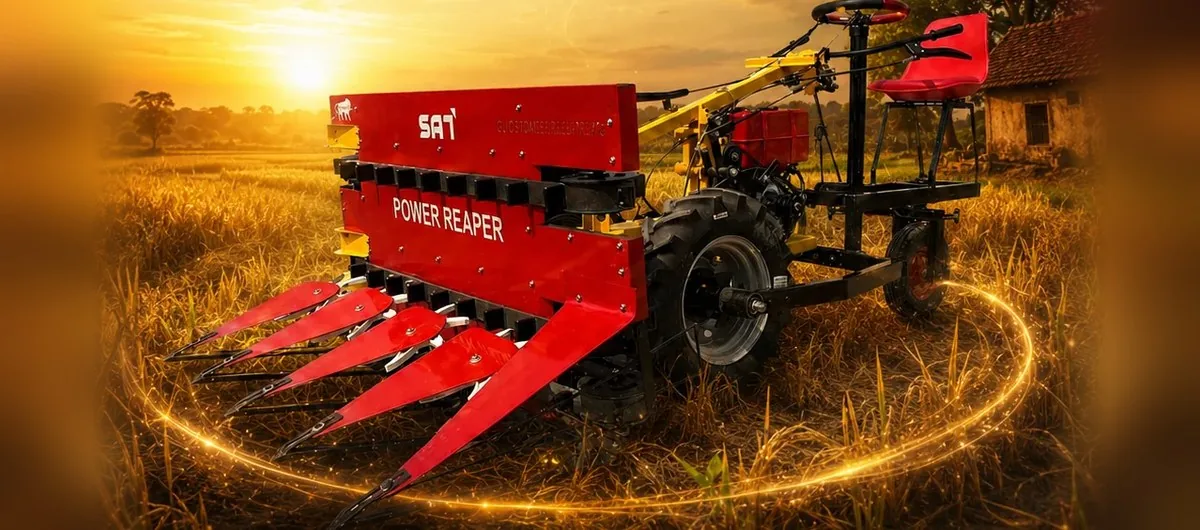
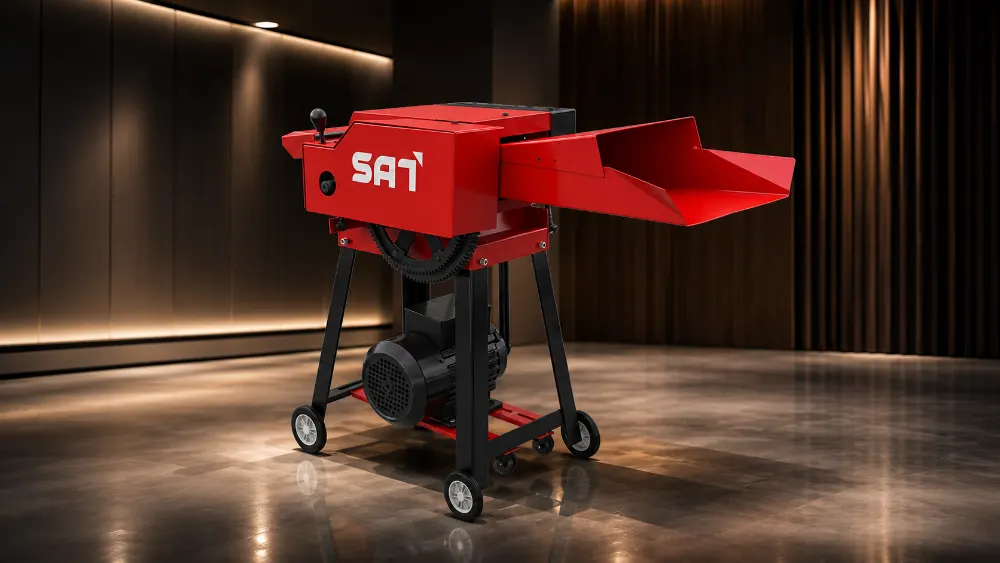
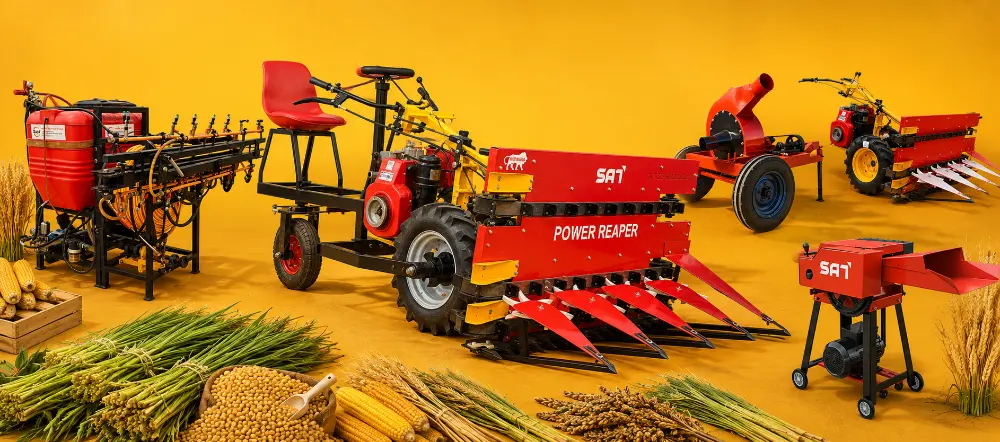
In broad terms, a power reaper is treated as harvesting equipment; a boom sprayer as plant-protection equipment; a chaff cutter as fodder or animal-husbandry equipment; and a straw loader under residue management or post-harvest heads. Getting the category right at the start avoids the most common cause of a file being returned.
If you are unsure which head your machine falls under, ask us. We prepare quotations against these categories regularly and can tell you which one previous approvals have used.
Which subsidy category does your machine fall under?
Farm machines are not one category, and getting the head right at the start avoids the most common cause of a file being returned. In broad terms:
| Machine | Category it is generally treated under |
|---|---|
| Power reaper | Harvesting equipment |
| Boom sprayer | Plant-protection equipment |
| Chaff cutter | Fodder or animal-husbandry equipment |
| Straw loader | Residue management or post-harvest |
Scheme names, category codes, assistance rates and deadlines change from year to year — confirm the current year's specifics on the official i-Khedut portal or with your Taluka Agriculture Office before you file.
3. Assemble documents before the window opens
This is where files are won or lost. Have these ready in advance, scanned and legible:
- Land records (7/12 and 8-A) in the applicant's name — the single most common mismatch
- Aadhaar card of the applicant
- Bank passbook copy showing an Aadhaar-linked account in the same name
- Caste certificate, where applying under a category that requires one
- A valid quotation from a registered manufacturer, on letterhead, with GST details and the exact model
- Passport photograph and mobile number reachable during processing
The name on your land record, your Aadhaar and your bank account must match. If land is in your father's name and the application is in yours, the file will stall — sort that out first, not after filing.
| Document | What it must show |
|---|---|
| Land records (7/12 and 8-A) | In the applicant's name — the single most common mismatch |
| Aadhaar card | Of the applicant |
| Bank passbook copy | An Aadhaar-linked account in the same name |
| Caste certificate | Where applying under a category that requires one |
| Manufacturer's quotation | From a registered manufacturer, on letterhead, with GST details and the exact model |
| Photograph and mobile number | Passport photograph; a number reachable during processing |
The name on your land record, your Aadhaar and your bank account must match. If land is in your father's name and the application is in yours, the file will stall — sort that out before filing, not after.
4. Apply as early in the window as you can
Because allocation is district-wise and finite, timing is not a formality. Farmers who file in the first days of a window have a materially better chance than those who file near the deadline, all else being equal.
Watch for the window opening rather than the closing date. Your Taluka Agriculture Office, the Gram Sevak and the portal itself all announce it.
5. Wait for pre-approval before you buy
This trips up genuinely eligible farmers every year. Most schemes require you to receive approval — often called a pre-sanction or work order — before you purchase the machine. Buy first and you may find the purchase is not eligible for reimbursement at all.
We will hold a quotation for you while your application is processed. Ask, rather than buying early and hoping.
6. Purchase, then submit the proof
Once approved, buy from a registered manufacturer and keep the complete paper trail: GST invoice, payment proof through a bank channel, and the machine's serial number. Cash purchases without a proper invoice cannot be claimed.
We supply a proper GST invoice with the model and serial recorded on it as standard — not on request.
7. Physical verification, then transfer
An officer typically inspects the machine to confirm it exists, matches the invoice and is installed at the applicant's farm. Keep the machine available and the papers together. After verification, the subsidy amount is transferred directly to the linked bank account.
Why files actually fail
- Name mismatch between land record, Aadhaar and bank account
- Purchasing before approval came through
- Applying late in the window, after district allocation ran out
- An informal quotation without GST details or an exact model number
- Wrong scheme category for the machine
- An unreachable mobile number when the department calls
Not one of those is about deserving the subsidy. They are all administrative — which means they are all avoidable.
What we can do from our side
We prepare the quotation in the format these applications need — letterhead, GST details, exact model, category-appropriate description — and we will tell you which category previous approvals used for that machine. We cannot file on your behalf or influence approval, and you should be wary of anyone who claims they can.
Farmers in other states: the same structure applies broadly, with different portals and scheme names. Tell us your state when you send an enquiry and we will prepare the quotation to suit. You can also check which districts our dealer network already covers.