

A chaff cutter is one of the few farm machines that runs twice a day, every day, for years. That changes what matters when you buy one. Peak capacity is not really the question — durability, blade quality and safety are, because you will be standing at this machine more than any other on the farm.
Size it by your herd, not by the biggest number available
Start from what you actually feed. Work out roughly how much green and dry fodder your animals get through in a day, then check how long a given machine would take to cut it.
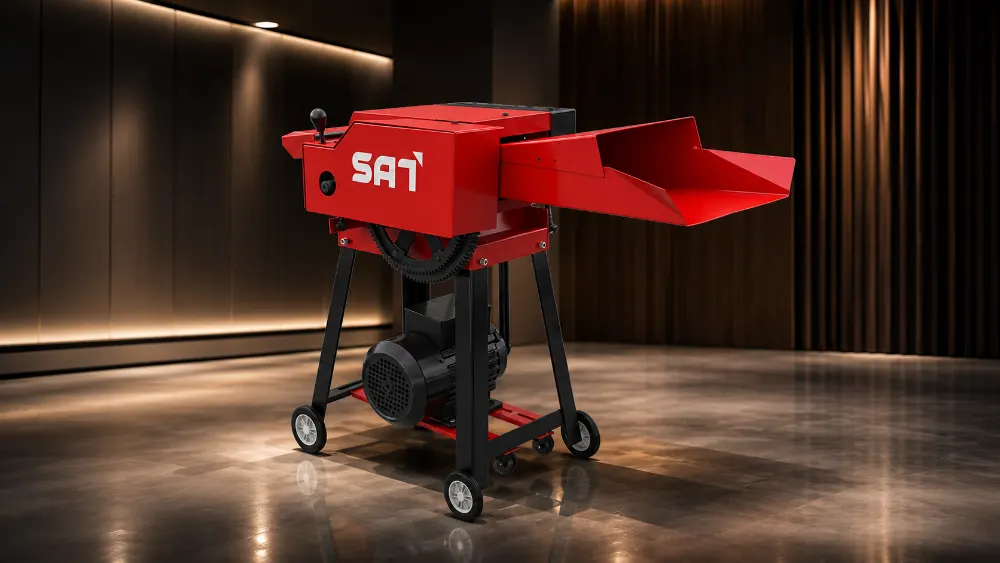
Our SAT-C301 handles 600-800 kg an hour. For most dairy sheds that means a full day's feed is done in well under an hour — which is exactly the point. You want the job over quickly, twice a day, not a machine running flat out at its limit.
Buying too small is the more common mistake. A machine that takes two hours twice a day quietly becomes the reason feeding gets skipped or rushed. Leave headroom, especially if your herd may grow.
Blades decide the machine's working life
If you look closely at one thing, make it the blades. They do all the work and take all the wear.
You want hardened steel that holds an edge through both green fodder and dry straw — those cut very differently, and a blade adequate for soft napier will blunt quickly on dry wheat straw. You also want blades that are genuinely replaceable, with spares you can actually get. The SAT-C301 uses 4 blades with both edges sharpened (8 cutting edges), supplied as standard replaceable wear parts from the same plant that built the machine.
A blunt blade does not just cut slowly. It tears the fodder, loads the drive, wastes power and gives you a ragged kutti that cattle pick through and leave.
The question to ask any seller: "Where do replacement blades come from, and how long do they take to arrive?" A machine that is cheap to buy and slow to re-blade is not cheap.
Adjustable cut length is not a luxury
Different animals need different cut lengths. Calves and milking animals do better on finer kutti; mature stock need more roughage and a coarser cut. Green fodder and dry straw behave differently too.
A machine with adjustable cut length serves a mixed herd with one purchase. A fixed-length machine forces a compromise on somebody — and it is usually the animals that would have benefited from a finer cut.
Cut length is also a waste question. Kutti that is too long gets trampled and pushed aside in the manger. Shorter cut means more of what you cut is actually eaten.
Match the drive to your shed, honestly
The SAT-C301 is available set up for an electric motor drive, which is the usual choice where shed power is reliable — quiet, simple, cheap to run and easy to start.
Where power is unreliable, be realistic about it before you buy. An electric machine in a shed with six hours of supply is a machine you will fight with twice a day. Tell us your actual power situation when you enquire and we will recommend the drive that fits it, rather than the one that is easiest to sell.
Safety is a specification, not an afterthought
Chaff cutters cause more injuries than any other machine on a small farm, and the reason is structural: hands feed material toward blades, twice a day, often in poor light, often by whoever is free.
What to insist on:
- Proper guarding over the blade and drive, fitted and left fitted
- A feed arrangement that keeps hands well clear of the cutting head
- A stop that can be reached instantly from the feeding position
- Stable mounting, so the machine cannot walk or tip while running
And one habit that matters more than any feature: everyone who will ever operate the machine gets trained on it, not just the person who bought it. Our free delivery training covers exactly this, because the person feeding the machine on a Tuesday evening is often not the person who signed the invoice.
Build quality: look at the frame and the feed rollers
A machine used twice daily for years is built differently from one used occasionally. Check the frame for solid welded fabrication rather than light assembly. Check the feed rollers — they take constant load and are what draws fodder in evenly.
We fabricate, weld and load-test every SAT-C301 in our own Ahmedabad plant, and every unit runs under load before it is cleared for dispatch. That is a deliberate choice for a machine in daily duty.
Where the chaff cutter sits in your fodder line
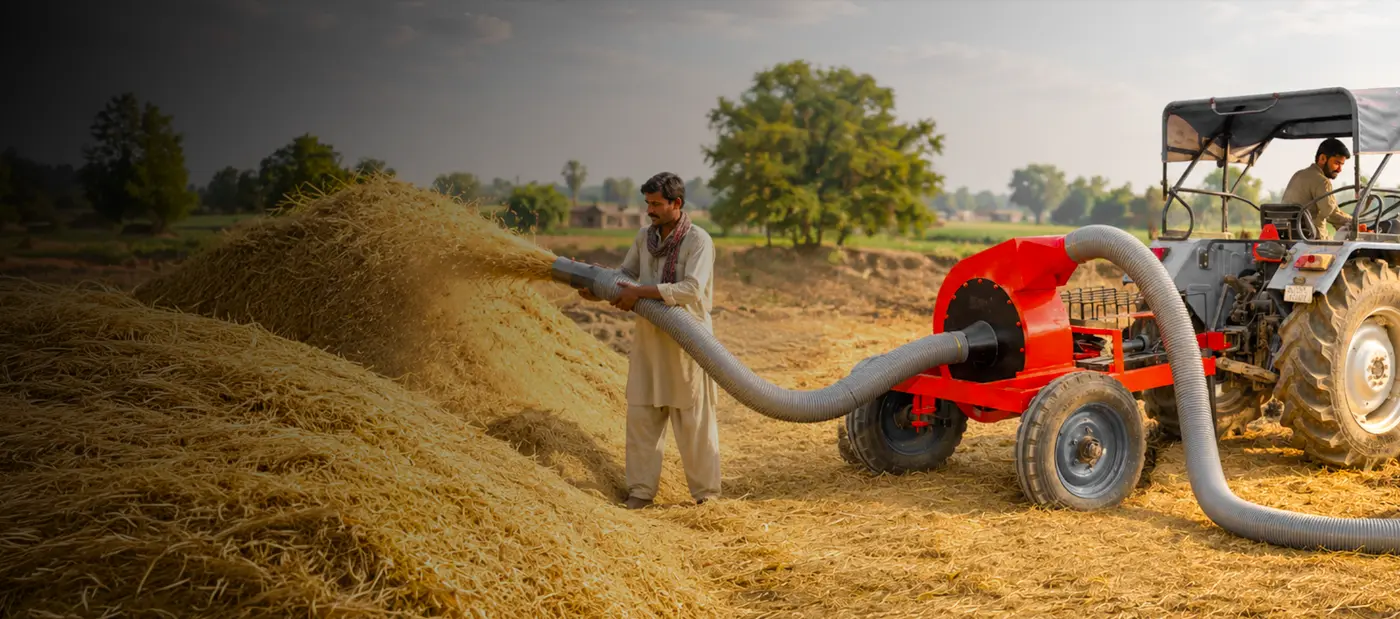
A chaff cutter handles the shed end of fodder. The field end is a different job — collecting straw after harvest. Pair the SAT-C301 with our SAT-L401 straw loader, which collects, chops and loads a full trolley of fine bhusa in 20–25 minutes, and your fodder line runs from field to manger without hand handling in between. The bhusa business case covers the economics of that side.
Fodder and animal-husbandry equipment is subsidy-eligible under several state schemes — see our Gujarat subsidy roadmap before you buy, since most schemes require approval before purchase.
What to check before you buy a chaff cutter
| What to check | What to look for | Why it matters |
|---|---|---|
| Capacity | Comfortably above your daily requirement, with room to grow | The SAT-C301 handles 600-800 kg an hour, so a day's feed is done in well under an hour. Buying too small is the more common mistake |
| Blades | Hardened steel, genuinely replaceable, with a confirmed source for spares | A blunt blade tears the fodder, loads the drive, wastes power and gives ragged kutti that cattle leave. The SAT-C301 uses 4 double-edged blades supplied as standard wear parts |
| Cut length | Adjustable | Calves and milking animals do better on finer kutti; mature stock need a coarser cut. Kutti that is too long gets trampled in the manger |
| Green and dry fodder | Handles both | They cut very differently — a blade adequate for soft napier blunts quickly on dry wheat straw |
| Drive | Matched to your real power situation | An electric machine in a shed with six hours of supply is a machine you will fight with twice a day |
| Safety | Guarding over blade and drive, feed arrangement keeping hands clear, a stop reachable from the feeding position, stable mounting | Chaff cutters cause more injuries than any other machine on a small farm |
| Build quality | Solid welded frame rather than light assembly; feed rollers that take constant load | A machine used twice daily for years is built differently from one used occasionally. Every SAT-C301 runs under load before dispatch |
| Training | Included, for everyone who will operate it | Not just the person collecting the machine |
A short checklist before you pay
- Capacity comfortably above your daily requirement, with room to grow
- Hardened, replaceable blades — and a confirmed source for spares
- Adjustable cut length
- Handles both green fodder and dry straw
- Drive that matches your real power situation
- Guarding, an accessible stop and stable mounting
- Training included for everyone who will operate it
Tell us your herd size and power situation and we will tell you which setup we would send — and if a smaller machine would do the job, we will say so.